A good chunk of my life has revolved more around the ebb and flow of academic year than calendar years. Between my own somewhat elongated educational endeavors, then working in and around universities for close to 20 years, my internal clock was pretty well attuned, and my ears would prickle not at the approaching season of pumpkin lattes but the imperceptible ringing of bells in innumerable classrooms around the globe.
For a while that faded a bit. Home schooling our kids gave us the freedom to create our own academic rhythms, and my work with universities paused for a while. But it’s kind of fun to once again feel my internal sonar reacting to the old academic schedules, courtesy of teaching at least once a year at Lutheran Theological Seminary in the Philippines.
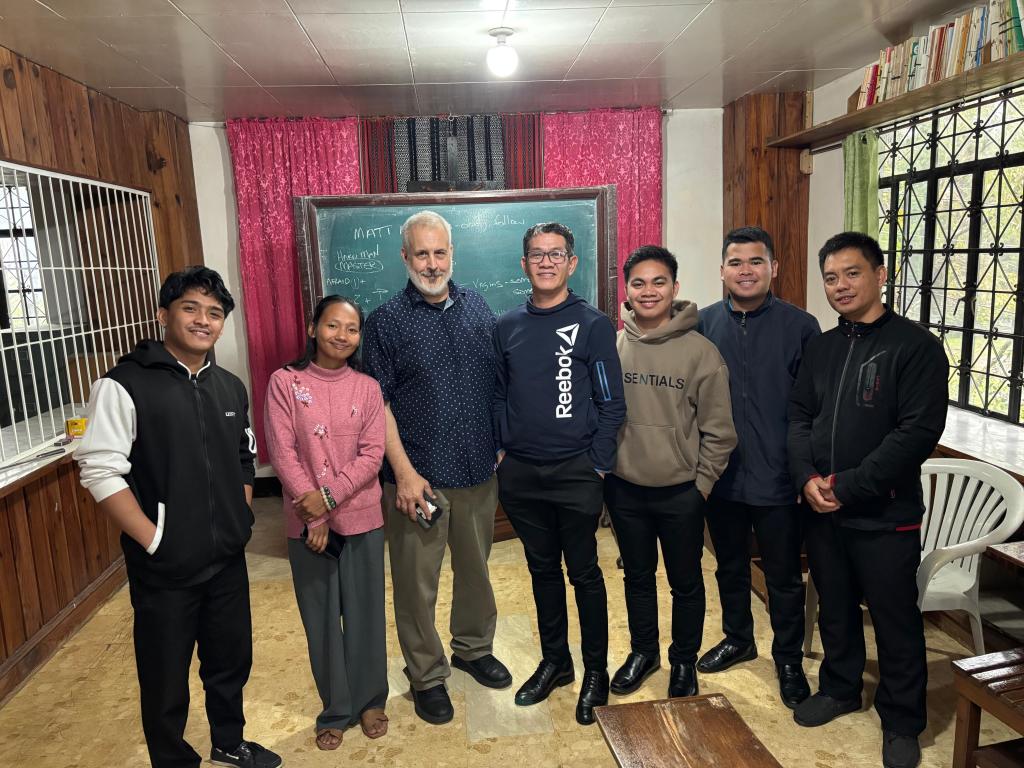
I joined them this year for an extra, extra-condensed class. More of a seminar, really. Due to having an additional faculty member at the school they only requested me to teach one class this fall instead of three. And while I’m happy to oblige, I couldn’t justify staying two weeks just for one class. So we agreed on a super-condensed one-week course on Christian Stewardship. This is a second-year course, and it was fun to reconnect with the group I met as very timid and scared first year students last August. Their confidence and skills have grown considerably over the last year!
My main purpose in teaching this course the past few years has been to expand how students think about stewardship. Traditionally, we tend to think of it in terms of tithing and financial issues. But anchoring the topic in Genesis 1, it’s clear stewardship is not primarily financial. It may not even be tangentially financial! Rather we are stewards of all of creation, and that means our entire beings serve as stewards of whatever blessings God has given us responsibility for this. With this definition, stewardship does include finances – though i prefer to refer to this category as resources – stuff we have. But stewardship also includes the time we have as well as the gifts and abilities we have been blessed with. It’s not just an arbitrary percentage of our lives that we grumblingly put in the plate. Everything we are is God’s, and that affects every decision we make in our lives.
It’s great to help students see stewardship as an identity whether single, part of a family, or overseeing a congregation. Hopefully it’s a helpful thing for them, and something that will be part of their identity in Christ every day of the rest of their lives.